
Recognize Hall County Deed Records
Deeds are only part of what the Hall County Clerk of Superior Court records. The same office files plats, liens, UCC filings, trade names, and transfer taxes. Instrument type matters most. A warranty deed, a quitclaim deed, a security deed, and a Sheriff's Tax Deed each carry a different promise. Each also serves a different purpose.
| Deed Type | What It Does | Common Use |
|---|---|---|
| Warranty deed | Conveyance with title covenants | Ordinary sale transfer |
| Quitclaim deed | Transfers whatever interest exists | Interest or title cleanup |
| Security deed | Georgia loan-security instrument | Debt context, not a simple sale |
| Executor deed | Transfer through estate authority | Probate-linked conveyance |
| Sheriff's Tax Deed | Instrument following a tax sale | Subject to redemption rules |
Recording gives the public notice that a filing exists. It proves nothing more. A prior lien, a boundary dispute, a competing interest, or an unrecorded claim can all sit outside what the index shows. Security deeds and liens encumber land without documenting the kind of transfer a conveyance deed provides.
The Hall Clerk Keeps the Real-Estate File
The Clerk's Real Estate Division operates from the Courthouse Annex at 116 Spring Street SE in Gainesville. The phone number is 770-531-7025. Its official Clerk page describes the recording duties the office handles. Per the Clerk's FAQ, anyone can walk in and request an ownership lookup. It takes just a year and a name. That matters. It is a reliable fallback when the online index comes up empty.
The official page presents the Hall County Clerk and its Real Estate Division route.
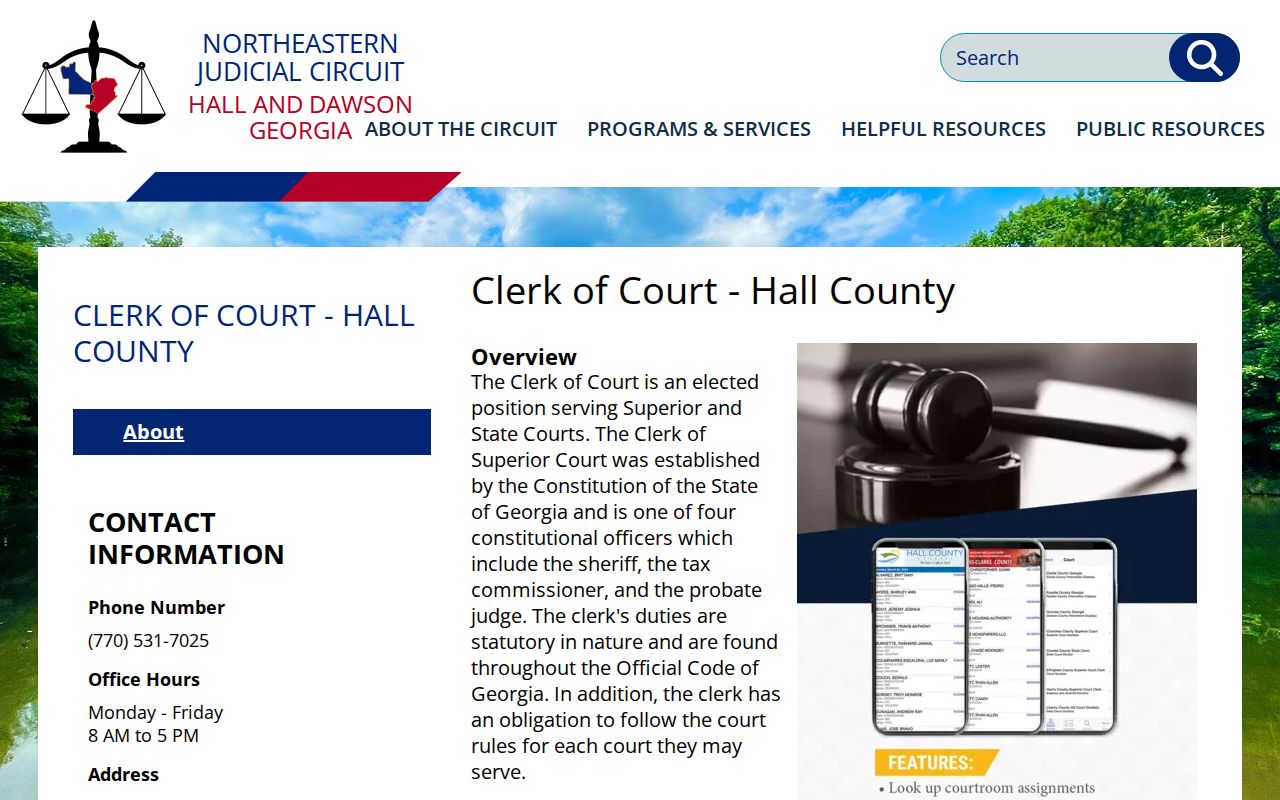
Call the division directly for counter procedure, old deed books, or any filing that GSCCCA does not surface.
Narrow a Hall County GSCCCA Name Search
The GSCCCA name search lets you filter by Party Type, Instrument Type, and County. You can also add a neighboring county. Another set of fields covers the Search Name, an optional date range, results-per-page count, and table display settings. Pick Hall County first. Type individual names as last name, then first name. Run initials, trusts, estates, and exact entity names in separate searches for cleaner results.
| Control | Purpose | Caution |
|---|---|---|
| Party Type | Separate grantor and grantee | Roles change across transfers |
| Instrument Type | Limit the filing class | A tight filter can hide related documents |
| County | Focus on Hall | Neighbor results may be false matches |
| Search Name | Last, first for people | Run spelling and entity variants |
| Date Range | Bracket the likely transfer | Web coverage is not historic custody |
Retrieve a Hall Deed by Book and Page
A parcel card or prior deed sometimes hands you a book and page citation. A plat or court paper can do the same. Use it. GSCCCA's dedicated form takes the county plus those two values. The central form lists coverage beginning January 1, 1990. It runs through August 4, 2026. That banner says nothing certain about Hall County's earliest online deed.
The official book/page form is the form to use.
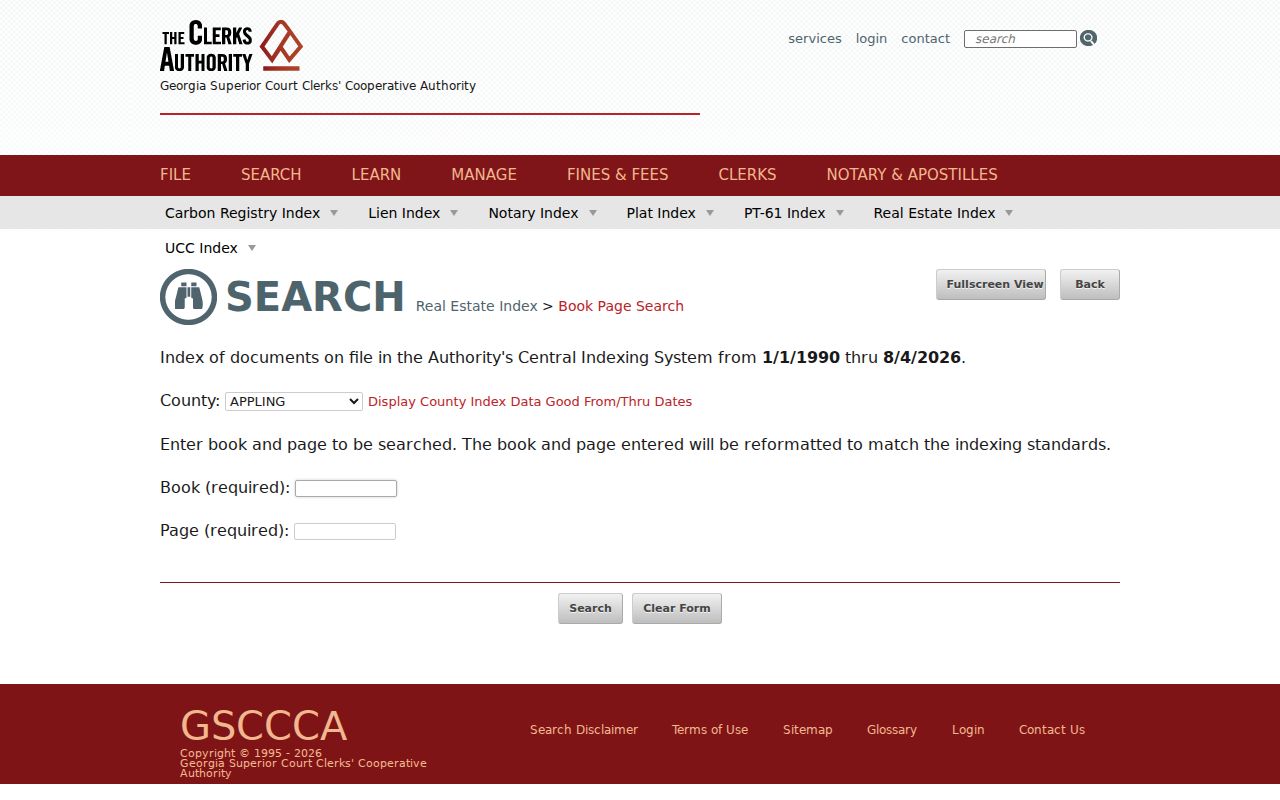
Citing the exact book and page sidesteps the flood of same-name matches, so keep the instrument number and record date alongside that reference.
Build a Hall County Grantor-Grantee Chain
Begin with the person who appears to own the parcel now. Open that deed and note who signed as grantor. Then search that grantor as a grantee in an earlier transfer. Confirm the legal description still describes the same land at every step. Record the date, deed type, book and page, and subdivision or land-lot text for each link in the chain.
- Find the apparent owner's purchase deed with that party as grantee.
- Read the prior owner as grantor and copy the legal description.
- Search that grantor as an earlier grantee and verify the land match.
- Repeat until online coverage ends, then continue in deed books.
- Grantor
- The party conveying an interest.
- Grantee
- The party receiving it.
- Chain of title
- The linked sequence of conveyances for the same land.
- Book/Page
- The citation used to retrieve a recorded filing.
Match Hall County Deeds to Plats
GSCCCA's property search asks for a subdivision name. It also warns that its coverage may not match the general index. The plat form goes further. It adds instrument type, name, Sec/GMD, district, land lot, and date fields. A plat can reveal lots, roads, bearings, easements, and adjoining lands. A short deed description leaves those out.
Georgia does not require every tract to be platted. So some Hall County parcels have none. Plats are filed by year under the name printed on them. That name may not be the current owner of record. Search development names, surveyors, and historic parties, then request the plat by book and page.
Look Beyond Hall's Online Deed Dates
Hall County identifies the Clerk as custodian of records. They reach back to the county's 1818 founding. GSCCCA's learn page states that every county has deed-index data since at least 1999. The central form displays a 1990 start. Neither figure is a verified Hall-specific cutoff. Ask the Clerk which book series covers the years you cannot reach online.
In July 2025, Hall approved $96,027.40 for Kofile preservation, digital archiving, and historic indexing. That work may widen access over time. It does not put every historic book online today. Older research may still call for deed books, Clerk assistance, city directories, newspapers, and Sanborn maps. It may also require exact date and name requests.
Older deed descriptions rarely match a modern street address. Expect land lots, districts, adjoining owners, roads, and subdivision names instead. Build a crosswalk from the present parcel to the newest deed, then to its referenced plat and earlier conveyance. Gainesville directories and Sanborn maps help pin down an obsolete street or building. Treat those historical entries as context, though, not as title evidence.
Obtain a Hall County Deed Copy
Copies start with GSCCCA. Its index and image access depends on the account tier you hold. The Clerk FAQ lists a website access fee plus a $0.50 per-page charge for images. Walk in and pay $0.50 per page, or mail a request for a known book and page at $1 per page. Ask about the current total first. Say whether a plain or certified copy is required. GSCCAA also runs eCertification for certified documents handled online.
A strong request names the grantor, the grantee, the instrument type, and the approximate recording date. Add the exact book and page when you have it. For plats, give the subdivision or the printed plat name. That label may not match the current owner of record. Save the certification details with the image too, so nobody later mistakes a plain downloaded page for a certified deed record.
Check the deed's legal description against the parcel card and the plat side by side. Note the land lot, the district, the acreage, any easements, and every prior instrument the deed incorporates by reference. When a security deed or lien matters, search for its release as well. For an estate, trust, or business party, record the capacity exactly as printed.
Georgia FANS sends filing notifications that look forward, matching on names, addresses, and document references. It is an alert service, not a historical deed search. GSCCAA cautions that matches are not guaranteed complete, accurate, or current. When proof of a filing matters, go back and review the index itself.
Recorded, not guaranteed. Hall County deed records show filed instruments, not a title opinion, and they may not reveal an unrecorded interest.
A complete evidence packet holds the index entry. It should also include the full instrument image, the parcel card, and each referenced plat. Add lien releases and any docket entry from a title case. Arrange everything by recording date. If a legal description shifts between records, say what explains the change. It may be a split, a combination, a correction, or an unresolved mismatch.
Deeds can reach outside the land records. One may cite probate authority, a business entity, or a court order. Keep that reference. Pull the named file from its custodian. The outside record may explain who had authority to sign. The recorded conveyance still counts in the public chain of title.
The question goes beyond a simple transfer at times. Liens and releases belong next to the deed chain then. GSCAAA's lien name form lets you set party type, instrument type, county, neighboring counties, name, dates, results per page, and display options. Hall County tax FiFas land in the Clerk's General Execution Docket after notice. The Tax Commissioner states that a FiFa lasts seven years and can be renewed indefinitely. Age alone clears nothing, so hunt for a later release.
A tax-sale deed needs extra caution. Hall County sells a Sheriff's Tax Deed rather than a warranty deed. The redemption period runs up to 12 months. The redemption amount can stack the bid, taxes, special assessments, and a premium on top. Even after the statutory period, further notice and quiet-title work may be required. Treat the tax-sale list, the FiFa, and the Sheriff's Tax Deed as separate events in the record. Redemption papers and later court or Clerk filings count as separate events too.
Old address evidence can bridge a weak deed description. The Hall Library holds Gainesville city directories, photographs from the 1880s forward, and local Sanborn fire-insurance maps. Georgia Historic Newspapers carries Gainesville titles with sheriff-sale, probate, and subdivision notices sitting near the deed news. Preserve the issue or map date with each clue. Use these sources only to spot names, streets, or structures. Then check each one against a recorded deed or plat. A directory listing never substitutes for the recorded chain. Every historic clue should stay tied to its source date.