
Identify a Hall County Owner
The Hall County route runs from place to parcel to person. A situs address pins down the physical tract first. Its map code then links the assessor result. It connects to every other county system. Only after that match should a name be treated as the likely owner of record. Finish with a deed check. The assessment roll can lag behind a newly recorded transfer.
- Open the Hall Tax Assessor's qPublic route and search the situs address. If it fails, simplify the address or locate the tract in GIS.
- Copy the map code, owner name, mailing address, legal-description terms, and sale fields shown on the assessment result.
- Search the owner or deed citation in the Hall real-estate index through GSCCCA. Match the land and map code, not the name alone.
- Read the newest relevant deed's grantee and date. If an entity is named, check its public registration separately.
This method answers who holds the recorded interest. It does not tell you who lives at the address. Occupants and owners can be entirely different people.
Trust the Hall County Parcel
Keep a short evidence log as the search moves. Write down the address exactly as entered, the full map code, the displayed owner spelling, the deed book and page or instrument reference, and the date you viewed each source. That discipline makes a stale assessment entry easy to spot and keeps two similar parcels from blending together.
Names fail as join keys. Two people share a name. One owner can hold several parcels. An entity can file under name variants. Hall County's map code is the safer bridge between systems, so preserve the string exactly, with its spaces, leading zeroes, and letters intact. The county publishes no decoding rule for it.
When an address stalls, strip the unit text or search with just the street number and name. You can also locate the parcel on the GIS map. Assessor Mapping can help at 770-531-6720. Once the parcel number is certain, the owner search is far less prone to a false match.
Read Hall County Owner Fields
Read the assessment result as a group of fields rather than one owner line. Capture the owner name, mailing address, situs address, map code, legal or subdivision text, sales history, values, exemptions, and tax district. qPublic is an assessment record. Its live field order can shift, so trust the labels loosely.
Sales and value fields help test a parcel match. But they do not establish ownership on their own. A sales-history row may reflect an assessment event instead of a complete title transfer. Treat the date, legal description, and map code as clues. Then compare them against the full recorded instrument.
The official assessor page is the stable entry point into the current service. It confirms the county office and its online property search tools.
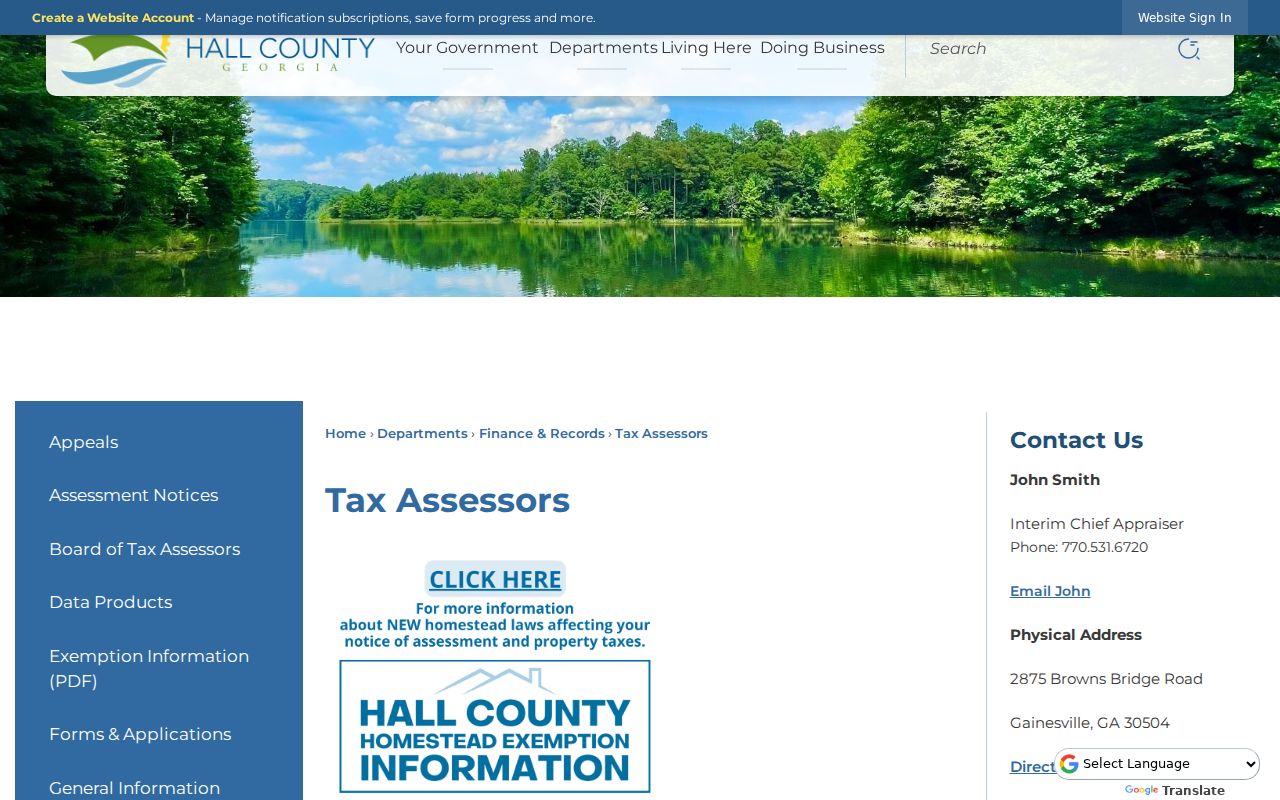
Use the assessment card as the first named-owner source, then date-stamp it and check the deed index.
Hall County Ownership Sources
Each official record answers a different part of the question. The assessor is the practical start. The deed records the transfer itself. A GIS map anchors the name to land, and a state entity result can clarify a company. Agreement across sources beats any single result.
| Source | Owner Info It Gives | Access |
|---|---|---|
| Hall Tax Assessor / qPublic | Assessment owner, mailing and situs fields, map code | Online; office help by phone or in person |
| Hall Clerk / GSCCCA | Grantee, date, book/page, legal description | Online index and images; counter or mail |
| Hall GIS | Parcel shape, location, map code, spatial layers | Online viewer; GIS staff |
| Georgia SOS eCorp | Entity status, control number, agent and officers | Public online search |
A tax-mailing address can sit in another state. It proves nothing about occupancy. A permit may name an applicant, contractor, or owner at filing time, yet it does not vest title. The parcel and the deed remain the core proof trail.
Confirm Who Owns With Deeds
The Hall County Clerk of Superior Court records deeds, liens, and plats. Use the GSCCCA real-estate name index with Hall County selected. Then narrow by party type, instrument type, and date. Individuals are entered last name first.
If you already hold a citation, go straight to the GSCCCA book and page search. That avoids repeating a broad name query. The Clerk uses that same reference for copies. Fees run fifty cents per page at the counter. By mail they are one dollar per page, apart from separate online access and image charges.
The search form itself displays the controls used to find a recorded owner.
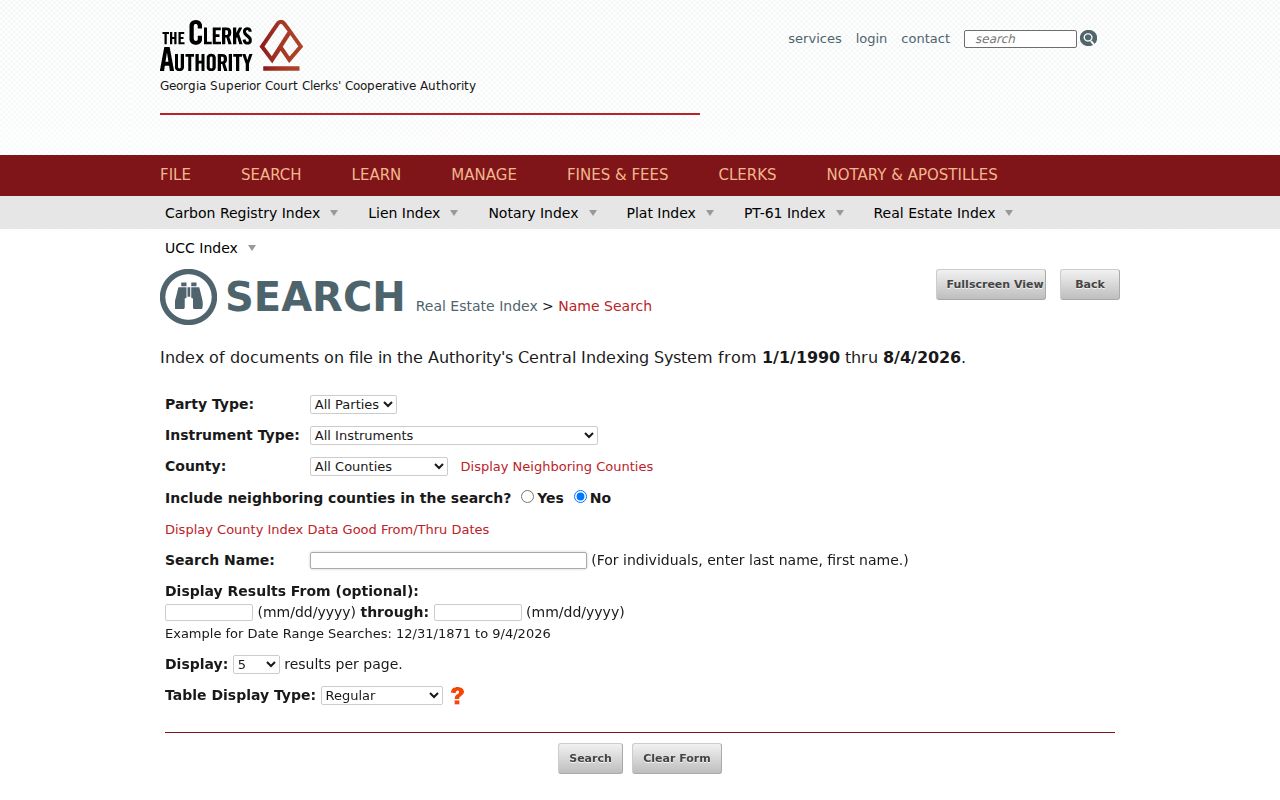
Compare the deed's legal description and book and page against the parcel. The grantee receives the interest. A later corrective, quitclaim, estate, or court-related instrument can still change the answer.
Hall County's Ownership Lag
For a very recent transfer, search both the seller and the buyer. Compare the recording date, instrument type, and legal description. Signing, closing, and recording dates can all differ. The recorded sequence beats an undated claim about the current owner.
Weekly qPublic updates do not mean title changes appear at once. Hall County reported a lag in deed and ownership updates. Changes had taken up to four months to reach qPublic. A 2024 processing project aimed to cut that delay to about a week. That goal is no promise for a given parcel.
Recent sale check. If the assessment owner and a recent transfer disagree, the newest recorded deed is the better confirmation of who owns the Hall County property.
Save the access date for both sources. A dated log shows whether a conflict is normal lag or a mismatch needing more work.
Hall County Entity Owners
Deeds do not always list a person. An LLC, corporation, trust, or estate can hold the title instead. Search the recorded name exactly. Variants matter too. The Georgia eCorp search supports Starts With, Contains, and Exact Match lookups by business name, control number, registered agent, or officer.
Trade names filed with the Hall Clerk explain a business label that differs from the deed owner. That label is only a clue. The operating name, registered agent, permit applicant, and title-holding entity are separate roles, and each name belongs with its own source. The result shows the organization and its public contact. It does not prove an officer or agent owns the parcel personally. Trusts may need trustee-name searches, while estates can require executor, administrator, or decedent variants.
Hall County Owner Access Routes
A good records request names the parcel, address, record type, date range, and preferred electronic format. Ask for an existing record. No Georgia agency must create a new report declaring who owns the land. A precise request is also easier to reproduce later.
Online tools are just one channel. The Tax Assessor sits at 2875 Browns Bridge Road in Gainesville, reachable at 770-531-6720. The Clerk's Real Estate Division is at 116 Spring Street SE and takes deed questions at 770-531-7025. In person, a year and a name are enough to start a lookup.
Book and page copies can be requested by mail. The Clerk FAQ lists fifty cents per page in person, one dollar by mail, with GSCCCA adding service and image charges. Hall's Open Records route covers its listed departments. Courts use their own channel.
Limits of Hall Owner Lookups
A public record names the assessment owner and the recorded grantee. It cannot prove who lives there. An assessment roll is not a title opinion, and a deed index may demand review of the full instrument and later filings. GIS lines stay approximate for private boundary questions.
Lawful use. A Hall County property owner lookup is for purchase research, boundaries, estate work, and other lawful purposes. Never use owner information to stalk, harass, intimidate, or harm anyone.
Georgia protects some address data. Hall offers an assessor non-disclosure application, and Safe at Home gives qualified participants an address substitute. Never rebuild a protected address from unrelated records.